Last update: June 2026
📊 Key data (2025–2026)
- Mountain rescues in Andorra: +200 interventions/year (Cos de Bombers d’Andorra, 2025)
- Helicóptero de rescate: base en Heliport d’Andorra la Vella, radio de acción <15 min to any summit
- Andorra's highest point: 2,942 m (Comapedrosa) — requires specific preparation
- Highest risk season: December–March (avalanches) and July–August (storm + heat)
- Number of approved GR routes: >50 official hiking network routes (Govern, 2026)
Extreme training at 2,600 meters: The latest exercise of the firefighters of Andorra and Catalonia
The high mountains do not forgive mistakes, and in the heart of the Pyrenees, constant preparation makes the difference between life and death. On June 13, 2026, the firefighters of Andorra And the firefighters of the Generalitat of Catalonia joined forces in a natural setting as imposing as it was unforgiving: the Estanys ForcatsLocated at an extreme altitude of 2,600 meters, this hard-to-reach enclave became the perfect testing ground to push underwater rescue techniques to the limit in extreme cold conditions.
This elite collaboration brought together specialists from the Underwater Unit of the Corps of firefighters of Andorra Members of the Catalan Underwater Special Operations Group (GRAE Subacuáticos) participated in the joint exercise. The objective was to test and standardize underwater search and rescue protocols in a high-mountain environment. At this altitude, factors such as low atmospheric pressure, oxygen depletion, and extremely low water temperatures drastically complicate any type of dive or rescue operation.
During the demanding practical exercise, the rescue divers faced challenges of high technical complexity:
- Progression in partially confined spaces: They simulated rescues under layers of residual ice or flooded rock cavities, situations where losing your bearings can be fatal.
- Advanced guidance systems: The use of lifelines and wired communication systems was tested to maintain constant contact between the submerged diver and the support team on the surface.
- Management of thermal shock and high-altitude decompression: Diving to 2,600 meters requires specific decompression tables and equipment prepared to withstand temperatures close to zero degrees without freezing.
The physical and mental coordination demonstrated by both teams highlighted that the technical preparedness of the emergency services in the Principality and its southern neighbors is at the highest European level. It's not just about knowing how to dive, but about mastering survival in an environment where access by land is almost impossible and every minute counts.
Why is international cooperation crucial in emergencies in Andorra?
Andorra is a small country with a predominantly mountainous territory and natural borders shared with Spain and France. For those of us who live here or visit the Principality frequently, it's clear that mountains don't recognize political boundaries. A hiker can get lost on the north face of an Andorran mountain and end up needing help in Catalan or French territory. Therefore, the emergency cooperation Andorra Spain It is a fundamental piece of the Pyrenean security system.
The synergy between rescue teams on both sides of the border allows for the optimization of resources that would otherwise be limited. If a serious accident occurs in a border area, the emergency dispatch center mobilizes the helicopter or medical team that is physically closest, regardless of their nationality. This rapid response protocol saves lives every year in the Pyrenees.
In addition to the joint exercise with the Catalan Fire Service, this close relationship has also been evident in recent days thanks to the presence in Andorra of members of the Underwater Activities Unit and the prestigious Underwater Activities Specialist Group (GEAS) of the Civil Guard in Huesca. This meeting, coordinated with the Spanish Embassy in the Principality, aims to consolidate operational exchange, share working methodologies in glacial lakes, and unify response protocols for potential cross-border emergencies.
For the thousands of tourists who visit Andorra to practice adventure sports—from canyoning to ice diving in the mountains during winter—this close collaboration between the police and fire departments provides an unbeatable safety net. Knowing that the best specialists on the Iberian Peninsula train together regularly brings enormous peace of mind when venturing into the region's wild nature.
How does the mountain rescue system work in Andorra?
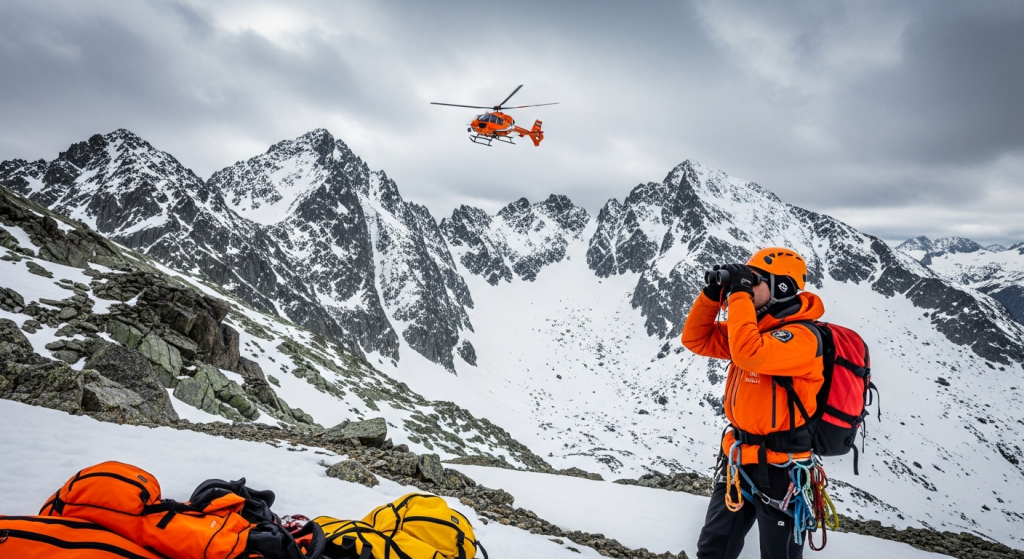
The Principality boasts one of the fastest and most efficient rescue services in the world thanks to its geographical scale and the high level of specialization of its personnel. The central pillar of the Mountain safety in Andorra It is the Mountain Rescue Group (GRM) of the firefighters of AndorraThis elite unit is operational 24 hours a day, 365 days a year, prepared to intervene in any corner of the country in a matter of minutes.
The functioning of a mountain rescue Andorra It follows a precise protocol that combines cutting-edge technology and human expertise:
1. Immediate activation and location
Once a distress call is received via emergency telephones, the GRM team assesses the situation. Weather permitting, the rescue helicopter is immediately deployed. Thanks to Andorra's small size, the flight time from the central base to the most remote point in the country is usually no more than 10 or 12 minutes.
2. State-of-the-art technology
Andorran firefighters are using drones equipped with thermal cameras to locate people lost at night or under thick layers of vegetation and snow. Similarly, mobile geolocation systems allow them to pinpoint the location of an injured person with meter-level accuracy simply by linking their smartphone.
3. Medical coordination at the accident site
The rescue helicopter not only carries GRM firefighters, but also typically travels with a doctor or nurse from the Andorran Emergency Medical Service (SUM). This allows for initial stabilization and intubation procedures to be performed directly on the mountain face before transferring the patient to the Nostra Senyora de Meritxell Hospital in Escaldes-Engordany.
Safety guide for hikers and mountaineers in Andorra
Although having such a powerful team of professional rescuers provides great peace of mind, the best safety tool is always prevention. hiking safety in Andorra It starts long before you lace up your boots. If you're planning a hike in our mountains, whether it's a simple walk through the Madriu-Perafita-Claror Valley or a challenging climb to the Comapedrosa peak, we recommend following these basic safety guidelines:
Plan your activity wisely
Don't underestimate the Pyrenean terrain. Always consult up-to-date route maps, carefully calculate the elevation changes, and estimate your hiking time, adding a safety margin in case of unforeseen circumstances. Check trail conditions beforehand through official tourism channels or parish offices (comuns).
Check the specific weather forecast
The weather in the high Pyrenees can change drastically in a matter of minutes. A sunny, hot summer morning can quickly turn into a thunderstorm with hail and a drop in temperature of more than 15 degrees Celsius in the afternoon. Always check the weather forecast. Andorra Weather before leaving and cancel the activity if storms or strong winds are forecast.
Equip yourself properly
Even for short hikes, your backpack should include essential items to ensure your safety. Mountain safety in Andorra:
- Lightweight outer garment and a waterproof windbreaker (three-layer system).
- Technical mountain footwear with non-slip sole (avoid urban or flat sports shoes).
- Sufficient water (at least 1.5 liters per person) and high energy value foods (nuts, bars).
- A basic first aid kit and an emergency thermal blanket.
- Mobile phone with the battery charged to 100% and, if possible, a portable external battery.
The importance of having specific insurance
In Andorra, emergency hospital medical care is guaranteed, but the costs of a mountain helicopter rescue may be billed to the user if it is proven that there was gross negligence, a lack of adequate equipment, or if reckless activity was being carried out off marked trails. Therefore, it is essential to have your national mountaineering federation membership card (which covers rescues abroad) or to purchase specific adventure sports travel insurance before undertaking any strenuous physical activity in the Principality.
The Andorran mountains are a unique natural paradise, but enjoying them safely requires responsibility, respect for the environment, and careful planning. With highly trained emergency services working alongside their international counterparts, safety is guaranteed; however, common sense is your responsibility.