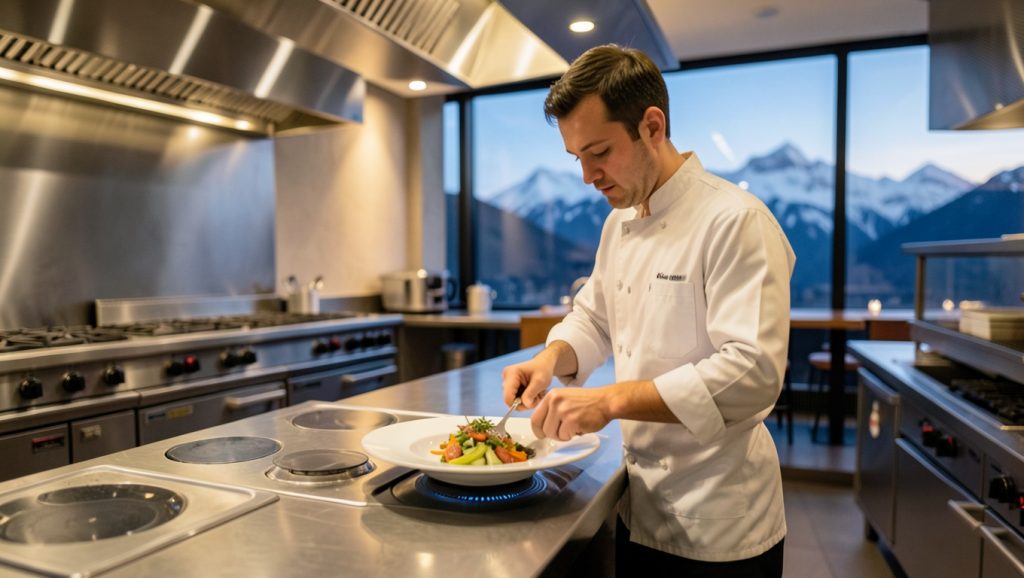
The search for over 500 workers in the hospitality, restaurant, and retail sectors highlights the need to bolster teams during the summer season. Technology alone won't solve the staffing shortage, but it can help reduce repetitive tasks, better control costs, and organize work in professional kitchens.
The Andorran hospitality sector faces a double challenge: staff shortages and modernization
The eleventh edition of the Trobada Laboral, also known as the Job Meeting, began in Andorra on May 19, 2026. According to available information, the hospitality, restaurant, and retail sectors were seeking more than 500 workers at this event. This was the third meeting of the summer season.
The figure points to an immediate need for recruitment in these sectors. When professionals are lacking, teams can take on more tasks and have more difficulty maintaining service times and quality during peak periods.
Modernizing professional kitchens can be one way to better organize work. This doesn't mean automatically replacing people with machines, but rather using tools that reduce the time spent entering orders, monitoring stock, or performing manual checks.
Key data
- More than 500 workers sought in hospitality, catering and retail.
- Eleventh edition of the Labor Meeting.
- Third call for applications of the summer season.
- May 19, 2026: date of the aforementioned work meeting.
Why do professional kitchens in Andorra need to modernize?
The hospitality industry can experience rapid changes in activity volume, especially during peak tourist season. Organizational tools can help maintain more stable service times when orders increase.
Among the issues these businesses typically manage are recruitment, staff turnover, cost control, food waste, and coordination between the kitchen and dining room. The importance of each will depend on the size of the establishment, its business model, and the volume of customers.
Basic digitization can facilitate some of this management. A system for orders, reservations, purchases, and scheduling gathers information and reduces reliance on manual entries. Advanced automation adds equipment capable of performing or controlling specific tasks. A small restaurant and a hotel with multiple service points don't necessarily need the same solutions.
Technologies that will transform professional kitchens in Andorra
Among the available options is digital order management. Orders can be sent directly to the appropriate area of the kitchen, while the front-of-house staff checks the status of each dish. Integration with reservations and delivery platforms can also reduce communication errors.
Digital inventory control allows you to see which products are in stock, which are in highest demand, and when they might need to be restocked. This information can help reduce stockouts and unnecessary purchases, although the results will depend on the quality of the data and how the system is used.
Demand forecasting tools can use available data to plan purchases, shifts, and production. They don't replace the judgment of managers, but they can help adjust preparations to the anticipated activity.
Smart cooking equipment can help maintain more consistent cooking times and temperatures. This can make it easier to repeat certain recipes and integrate new staff. However, defining the dish and overseeing the process will still depend on the establishment's staff.
Cold storage monitoring solutions can issue alerts for temperature changes. These systems can complement food hygiene and safety protocols, but they do not replace team checks or responsibilities.
In businesses where it's feasible, automation can be applied to repetitive tasks such as preparation, dispensing, washing, or sorting. Data analysis can also help study dish profitability, waste, and working times. The choice will depend on the investment, available space, and business needs.
How will technology help solve the labor shortage?
Reducing repetitive processes and duplicate controls can free up work time. That time could then be dedicated to preparation, supervision, or customer service. The specific effect will depend on which tasks are automated and how the team is reorganized.
Digitized recipes and guided procedures can facilitate training. A newly hired employee can consult quantities, steps, and quality controls without relying solely on informal explanations. These tools are supportive, but they do not replace the experience of the kitchen staff.
Digital shift planning allows you to visualize anticipated needs and better distribute the workload. It can also help identify peak periods. However, technology does not eliminate the need for cooks, line cooks, front-of-house staff, and management personnel.
The short answer is clear: technology can alleviate some tasks associated with staff shortages, but it doesn't eliminate the need to hire and train professionals. Kitchens will continue to need people to make decisions, resolve issues, and maintain service levels.
Advantages for restaurants, hotels and other food service businesses
A tool tailored to the actual operations of the business can help organize more services with the available resources. It can also promote greater consistency in production and delivery times, provided the team receives training and the solution is used correctly.
Connected systems can reduce errors in orders, purchasing, and inventory. They also allow for more detailed calculations of the cost of each dish and its profit margin. This information can support menu decisions when raw material prices fluctuate.
Tighter planning can reduce food waste. Traceability makes it easier to track when a product was received, how it was stored, and in what preparation it was used, provided the business records this data correctly.
Challenges and risks of digitizing a professional kitchen in Andorra
Digitizing a kitchen involves an initial cost. You have to consider the equipment, licenses, maintenance, facility adaptation, and training. Buying a solution without first identifying the problem it's meant to solve can lead to expenses that are difficult to justify.
The team needs to learn how to use the tools fully. There may also be reliance on connectivity, technology providers, and technical support. A backup plan is useful to maintain operations if the system goes down during a period of high activity.
Data protection requires careful attention when managing information about customers, employees, or suppliers. Resistance to change may also arise among professionals accustomed to traditional methods. Explaining the objective, listening to the team, and providing training before implementation facilitates adaptation.
A practical option is to start with a pilot project. The business can test a solution in a specific area, measure the results, and then decide whether to expand it. Service time, cost per dish, waste, productivity, and customer satisfaction can serve as indicators.
New job opportunities to work in the hospitality industry in Andorra
The integration of digital tools can reshape the profiles of hotels, restaurants, and food service companies. Professionals who can combine culinary expertise with digital management, cost control, logistics, or equipment maintenance can become highly valued.
Managing restaurant programs, food safety, and using smart equipment can improve candidates' preparedness for certain positions. Knowing how to interpret production and cost data can also be helpful.
The search for over 500 workers reflects a need for staff in the hospitality, restaurant, and retail sectors. For anyone interested in working in Andorra, it is helpful to prepare demonstrable experience and review the applicable employment conditions and requirements before accepting an offer. The information available about the Job Fair does not detail the requirements for each position.
What should Andorran hospitality businesses do now?
The first step is to review the processes. The business can identify which tasks are most time-consuming, where errors occur, and which activities generate the most waste. Then it can prioritize a specific solution for orders, inventory, shifts, or production.
Next, it's necessary to compare suppliers, implementation costs, and available technical support in the country. Training should be planned both before and after implementation, because a poorly used tool is unlikely to produce the desired results.
It's also helpful to establish key performance indicators (KPIs) from the outset: service time, cost per dish, waste, productivity, and customer satisfaction. Reviewing the data after the peak season will allow you to adjust your investment and decide which technology warrants further development. The tool should address a specific business need.
Conclusion: The kitchen of the future will be more connected, efficient, and specialized
The search for over 500 workers highlights the hiring needs facing the hospitality, restaurant, and retail sectors in Andorra. Professional kitchens can combine hiring with improved process organization. Technology can support productivity and cost control, but its effectiveness will depend on realistic implementation.
Modernization requires investment, training, and a phased approach. Business owners, investors, and workers interested in living, investing, or starting a hospitality business in Andorra can contact Andorra Insiders to study your options.
Frequent questions
How many workers is the hospitality industry in Andorra looking for?
According to information from the Labor Fair, the hospitality, restaurant and retail sectors are looking for more than 500 workers.
What technologies will be incorporated into professional kitchens in Andorra?
The reference text does not specify which technologies businesses will incorporate. Among the options they may consider are order and inventory systems, demand forecasting, smart cooking equipment, refrigeration monitoring, and automation of repetitive tasks.
Will automation eliminate jobs in the Andorran hospitality industry?
There is no data in the reference information to support this claim. In general, automation can reduce some manual tasks, but businesses will still need professionals to cook, serve, manage, and resolve issues.
What advantages does digitizing a restaurant in Andorra offer?
It can help organize orders, control costs and inventory, reduce errors, and better manage production. The result will depend on the tool chosen and how it is implemented.
Which profiles will have the most opportunities in the tech hospitality industry?
The information from the Job Fair does not specify the most in-demand profiles. As a guide, knowledge of restaurant management software, cost control, logistics, maintenance, and data analysis, in addition to relevant professional experience, may be useful.
How can a restaurant begin its digital transformation?
You can review your processes, prioritize a specific need, compare suppliers, train the team, and measure results before increasing investment.
Can a foreigner work in the hospitality industry in Andorra?
The reference information does not detail the requirements for foreign workers. Before accepting an offer, it is necessary to review the applicable labor and immigration conditions and confirm whether specific authorization is required.
Sources
- Andorran News AgencyInformation on the Job Fair and the search for workers in hospitality, catering and commerce.
Last update: September 2026. The information in this article is verified with official sources from the Government of Andorra.