Rehabilitating an existing building in Sant Julià de Lòria will be more viable in certain cases: owners will be able to compensate for the parking spaces they are unable to create by paying approximately €24,000 for each one. The measure affects properties that have already been built and aims to facilitate projects stalled by urban planning requirements.
The new ordinance does not eliminate the requirement to provide parking. It opens an alternative route when it is technically impossible to create all the required spaces within the property or within a 500-meter radius. The owner must justify this impossibility and assume the cost of the compensation.
Key data
- Approximately 24,000 euros for each unavailable parking space.
- 500 meters: maximum radius in which alternative places can be sought.
- Two-year transition period to review certain places located on other plots.
- At least two buildings already known to the Comú could be eligible for the measure.
- The approval came with the abstention of the communal minority.
What has Sant Julià approved regarding parking spaces
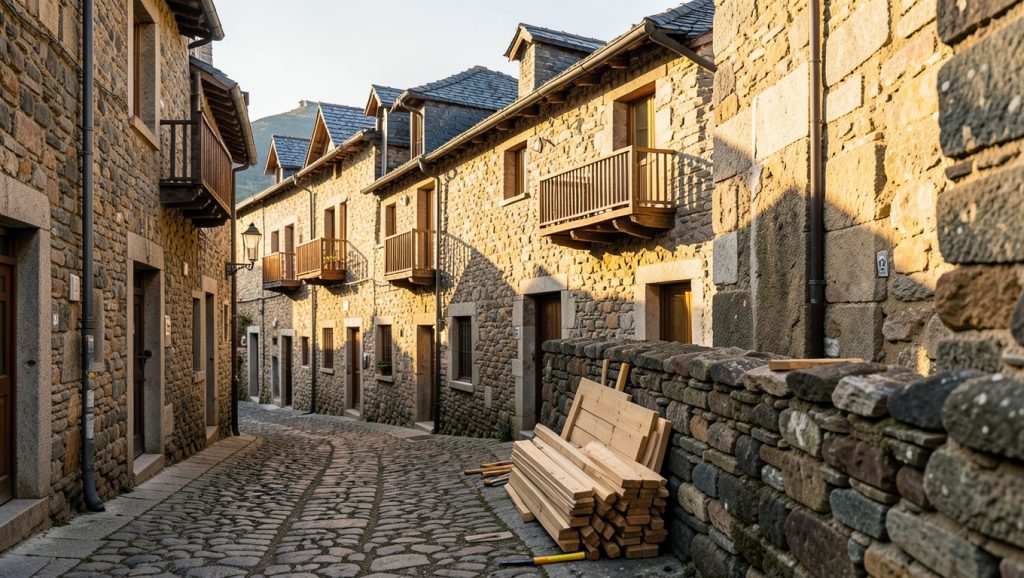
The Sant Julià de Lòria parish council has approved a new ordinance to facilitate major renovation work on existing buildings. The aim is to allow older buildings, especially in the parish's historic district, to be renovated even if they lack sufficient space to fully meet parking requirements.
The practical answer is simple: if the owner is unable to create all the required parking spaces, they can pay compensation of approximately €24,000 for each space not yet available. Authorization will still depend on compliance with all other urban planning requirements.
The measure was approved with the abstention of the minority council. According to the senior consul, Cerni Cairat, there are projects in existing buildings that could be blocked by the requirement to build parking facilities.
Which buildings does the new measure apply to?
The ordinance is intended exclusively for existing buildings undergoing renovation. It does not apply to new constructions, which must continue to comply with the parking requirements established by urban planning regulations.
The owner will have to prove that they cannot create parking spaces within their own property. They must also prove that it is not possible to create them on another plot of land located within a 500-meter radius.
The compensation is designed to address the limitations of existing buildings, not to exempt new constructions from parking obligations.
What does it mean for the impossibility to be technical?
The technical impossibility must be demonstrated in each project. The ordinance requires proof that the parking spaces cannot be created on the same property or on another plot located within the designated area.
Mere financial hardship does not necessarily equate to technical impossibility. Before submitting the project, the owner should request a technical analysis to determine how many parking spaces are required by regulations, how many can be made available, and why it is not possible to create the remaining spaces.
How much does it cost to compensate for the missing parking spaces?
The estimated cost is €24,000 for each parking space that cannot be made available. The calculation depends on the number of spaces required and those that can be created or obtained within the established radius.
The example provided by the Comú helps to illustrate this. A building required to have four parking spaces, but where only one can be made available, would have three outstanding spaces. The approximate compensation would be €72,000, provided all other requirements are met.
Indicative formula
Unavailable spaces × 24,000 euros = approximate compensation.
The owner should include this amount in the initial budget and confirm the specific conditions of the ordinance with the Comú (local council). The figure is approximate and does not replace the final settlement that may apply in each case.
What requirements must the owner meet?
The first step will be to technically verify that it is not possible to create the parking spaces within the building. After that, it will be necessary to check if they can be created on another plot of land located less than 500 meters away.
Payment of the compensation fee does not replace the building permit. The project must still comply with all other applicable requirements. The fee addresses a specific deficiency, but does not, in itself, grant authorization to carry out the works.
Before starting the renovation, the owner should know the required number of parking spaces, the number they can provide, and the technical justification for any remaining spaces. They will also need to verify the status of any parking spaces located outside the property and their connection to the building.
Why the measure could boost rehabilitation and housing
Some old buildings in Sant Julià could not be renovated because their characteristics did not allow for the creation of the required parking spaces. The new route may facilitate the restoration and resale of these properties, provided they comply with all other regulations.
The administration is aware of at least two buildings whose owners are interested in promoting their rehabilitation. This information indicates that potential cases for implementation already exist, although it does not yet allow for calculating the measure's impact on the housing supply or public revenue.
The Comú does not have a forecast of the revenue that the fees could generate, nor has it prepared an economic impact study. Therefore, any calculation of a project's profitability must consider the compensation as an estimate and not as a final amount.
What happens to the squares located on another plot?
The ordinance establishes a two-year transitional period to review and regularize certain previous situations in which the required places are located on a different property than the building to which they are linked.
During that period, the Urban Planning Department must examine the affected cases and verify that the relationship between the property and the squares complies with the conditions established by the regulations.
Before validating a parking space located in another building, the owner should verify how it is linked to the building and whether that link meets the required conditions. The existence of a prior agreement does not, in itself, guarantee that the situation is regularized.
Risks and outstanding questions for owners and investors
Josep Majoral raised the need for greater guarantees regarding parking spaces located on separate plots of land. His concern is that a space linked to a building could end up being used as a storage area, rented out for another purpose, or used for something other than parking.
The regional minister proposed establishing a clear encumbrance or easement on the corresponding land, preventing its use for other purposes. The proposal aims to ensure that the parking spaces remain designated for parking.
Economic information is also lacking. There is no official forecast of the revenue the tax will generate, nor an economic impact study of the measure. Therefore, any profitability calculations must be made cautiously and without assuming a specific economic outcome.
What a buyer should check
- The number of places required for the planned project.
- The technical possibility of enabling them on the property.
- The existence of alternative parking spaces within a 500-meter radius.
- The linking of squares located on other plots.
- The approximate cost of compensation.
- Compliance with the remaining urban planning requirements.
Practical guide to rehabilitate a building in Sant Julià de Lòria
- Check what parking obligations apply to the building.
- Calculate how many places can be made available on the property itself.
- Request a technical analysis on the impossibility of creating the remaining positions.
- Check if there are alternative parking spaces within a 500-meter radius.
- Multiply the number of unavailable places by the reference of 24,000 euros.
- Compare the compensation with the available parking alternatives.
- Submit the justification to the Urban Planning Department and confirm the applicable requirements.
- Review the situation of the squares located on other plots.
What does the ordinance mean for living, investing or starting a business in Andorra?
Greater flexibility in renovations could facilitate the restoration of older buildings in Sant Julià, both for housing and other permitted uses. It could also offer an alternative for owners whose buildings lack the physical capacity to meet all parking requirements.
The opportunity has its limits. The payment of €24,000 per parking space may facilitate the renovation, but it could also increase the overall budget. Furthermore, permits and compliance with all other urban planning requirements will still be necessary.
The ordinance eliminates a possible blockage due to lack of parking, but maintains the obligation to justify the impossibility and comply with the other applicable rules.
Frequent questions
Will it be possible to rehabilitate any building in Sant Julià without building the required squares?
No. The measure applies to existing buildings and requires proof that it is technically impossible to enable parking spaces on the property or within a 500-meter radius.
How much does each unassigned parking space cost?
The planned compensation is approximately 24,000 euros for each place that cannot be made available.
Does the regulation apply to newly constructed buildings?
No. New constructions must continue to comply with the parking requirements established by urban planning regulations.
What happens if three places are missing?
For reference, three unavailable spaces would entail an approximate compensation of 72,000 euros, provided that the project meets the other requirements.
Does payment guarantee the rehabilitation license?
No. The payment compensates for the lack of certain spaces, but the project must comply with the rest of the urban planning and administrative requirements.
Sources
Original information published by Altaveu Y official site of the administration of Sant Julià de Lòria.
Last update: October 2026. The information in this article is verified with official sources from the Government of Andorra.