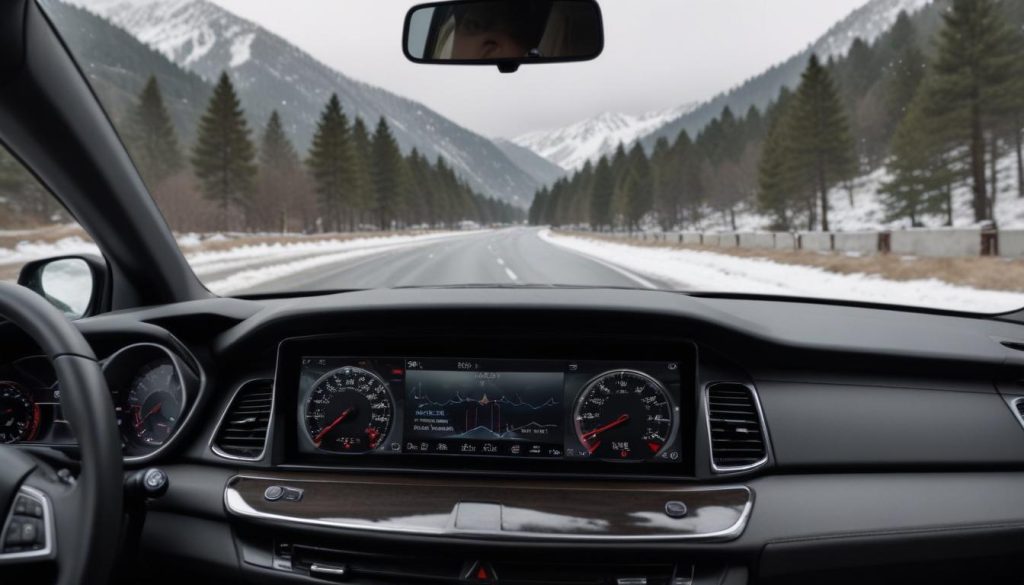
Did you know that in Andorra, road conditions can change drastically in a matter of minutes due to the terrain? Don't let an unexpected snowfall disrupt your digital nomad plans.
The Road conditions in Andorra It is managed through the mandatory use of winter equipment. November 1st to May 15thIt is imperative to consult the official website of Mobilitat Andorra to learn about the color-coded alerts, where the use of snow tires or chains is strictly monitored under fines of up to 500 euros for heavy vehicles.
Is the use of winter equipment mandatory in Andorra?
The short answer is a resounding yes, but it's conditional on the calendar. In the Principality, road safety during the colder months is not left to chance or the driver's interpretation. According to the Traffic CodeAll vehicles traveling on Andorran roads must be equipped for winter conditions between November 1st and May 15th of the following year. The truth is that this rule does not depend on whether there is snow on the road at that precise moment; it is a temporary obligation that guarantees that, in the event of any sudden drop in the snow level, traffic will not collapse.
Failure to comply with these regulations not only puts your safety and the safety of others at risk, but also carries immediate financial penalties. Patrols of Police Service They carry out preventive checks, especially at border access points of Riu Runner (Spain) and Pas de la Casa (France). If weather conditions require the use of equipment and you do not have it, officers may prohibit you from continuing your journey, forcing you to park your vehicle until the road is clear or you have the necessary equipment.
What is considered approved equipment?
Not just any accessory is valid for complying with the law. Winter tires (marked with the symbol) are considered approved equipment. 3PMSF —a three-peaked mountain with a snowflake— or the marking M+Sand metal or fabric chains of the correct size for the tire. Let's be honest: if you live here or plan to spend extended periods as a resident, the smartest thing to do is fit winter tires. They save you the inconvenience of getting out of the car to put on chains in a blizzard and offer far superior grip when the temperature drops below freezing. 7 degrees.
Key dates of the regulations
The compulsory period officially begins on November 1st and ends May 15thIt is essential to understand that this rule applies to all vehiclesRegardless of their country of registration. Many Spanish tourists mistakenly believe that if it's sunny in their home city, they don't need anything to go up to Andorra. The reality is that high-mountain weather is unpredictable. The fine for not carrying the required equipment ranges from 180 euros for passenger cars and can exceed 500 euros for vehicles over 3,500 kg, according to data published periodically by Official Bulletin of the Principality of Andorra (BOPA).
| Concept | Andorra | Spain (Media) |
|---|---|---|
| Mandatory period | November 1st to May 15th | Only under specific signage |
| Minimum penalty | 180 € | €200 (only if there is an R-412 signal) |
| Use of winter tires | Highly Recommended / Standard | Residual use (less than 5%) |
Where can I check real-time road conditions?
To move around the country with complete freedom and security, the essential tool is the official portal of Mobilitat AndorraUnlike other countries where information may be scattered, here the system is completely centralized. The website and its mobile app offer an interactive map showing the Road conditions in Andorra using a very intuitive color code. This system allows drivers to know in seconds whether they need snow chains to access ski resorts. Grandvalira o Pal Arinsal, or if the d'Envalira tunnel presents any restrictions.
The accuracy of the Andorran system is remarkable due to the dense network of weather stations and surveillance cameras distributed throughout the road network. Department of Mobility manages more than 180 cameras They broadcast live images, allowing you to see for yourself whether the road at Coll d'Ordino is white or black before leaving home. This is especially useful for professionals who work remotely and need to travel between parishes for meetings or errands.
Essential apps and websites
The website www.mobilitat.ad It's the central hub for information. Furthermore, its smartphone app is highly recommended, as it allows you to receive push notifications in case of serious incidents or road closures. Another valuable source is the official account of Twitter (X) @andorra_mobilwhere real-time updates are published on accidents, traffic jams due to tourist influx, and the start of mandatory snow chains on specific sections of road. The speed of response from Andorra's road maintenance services is enviable: as soon as it starts snowing, snowplows (máquines llevaneu) are deployed to keep the main roads clear.
Official information channels
In addition to digital media, Andorra has LED information panels on the main roads (CG-1 and CG-2) that indicate the status of mountain passes and tunnels. The color system you will see on these panels and on the website is defined as follows:
- Green: Normal traffic, no incidents.
- Yellow: Drive with caution. Vehicles over 3.5 tons are prohibited from entering, and all others must travel at a maximum speed of 60 km/h with equipment.
- Red: Mandatory equipment (chains or snow tires). Maximum speed 30 km/h.
- Black: Road closed to all types of vehicles due to extreme risk or excessive snow accumulation.
Compared to the DGT in SpainAndorra's system is much more dynamic and specific. While in Spain information usually refers to entire provinces, in Andorra it is broken down into sections of just a few kilometers, allowing for much more efficient and safer traffic management for the user.
What traffic restrictions are in place in Andorra during the ski season?
The ski season transforms mobility patterns in the Principality. With the arrival of thousands of winter sports enthusiasts, the Road conditions in Andorra It is subjected to considerable pressure, especially on weekends and holidays such as the Immaculate Conception or Christmas. The restrictions are not only meteorological but also logistical. The Government of Andorra, through its Ministry of Territory, implements special traffic plans to minimize the impact of traffic jams in the urban centers of Andorra la Vella and Escaldes-Engordany.
One of the most common measures is restricting traffic for heavy vehicles during periods of heavy snowfall. To prevent a truck from blocking the only access road to a higher parish, mandatory parking areas are set up for truckers in lower areas until the road is in optimal condition. This ensures that cars and emergency services can move more freely.
How to avoid delays at the border?
The critical point is undoubtedly the border with Spain in the Riu RunnerOn peak days, entry queues can start forming as early as 9:00 a.m., and exit queues typically begin around 5:00 p.m., coinciding with the closing of the ski slopes. To avoid wasting hours in the car, the recommendation is clear: enter the country before 8:00 a.m. or after 11:00 a.m., and leave before 3:00 p.m. or after 8:00 p.m. This is crucial, as the country's topography limits alternative routes, turning the main road into a natural bottleneck.
Peak hours
Let's be honest: if you try to leave Andorra on a Sunday in February at six in the evening, you're going to encounter traffic. The delays at the border can easily reach... 5 to 10 kilometersAn excellent alternative for residents and digital nomads living in the country is to use the national public transport system. The bus system (Lines L1 to L6) and the Bus Express Their frequency and efficiency have improved significantly. Furthermore, using an electric bike or simply walking is the smartest way to get around the central valley during peak tourist season.
Traffic jams in Andorra are comparable in intensity to those in major European capitals like Madrid or Paris, but with the unique characteristic that we are surrounded by mountains. This means there are no "parallel streets" to escape to. Therefore, data-driven planning is essential. Mobilitat.ad It is your best ally to maintain your productivity and quality of life during the winter.
How to drive safely in Andorra during a snowfall?
Driving on snow or ice requires a technique that is very different from driving normally on dry asphalt. In Andorra, where the slopes of the 10% or 12% While accidents are common, caution is the key. The first golden rule is smoothness: any sudden movement of the steering wheel, accelerator, or brake can cause an immediate loss of traction. The reality is that many winter accidents are not caused by the snow itself, but by the overconfidence of drivers who believe their 4x4 vehicle is immune to the laws of physics.
It is vital to maintain a safe distance that is, at least, the double the usual amountBraking time on snow or ice increases exponentially. If you feel the car start to skid, stay calm, don't slam on the brakes, and try to steer the vehicle gently in the direction you want to go. On steep descents, always use the brakes. short gears so that the engine braking holds the vehicle, thus preventing the brakes from overheating or the wheels from locking up.
Tips for digital nomads behind the wheel
If you're a newcomer to the digital world, you might not be used to winter maintenance routines. Before heading out, make sure you remove all the snow from your vehicle's roof. It's not just a matter of courtesy; if you brake suddenly, snow from the roof can slide onto your windshield and completely obstruct your view, as well as result in a traffic ticket. Also, check that your windshield washer fluid contains antifreezeOtherwise, it will freeze on contact with the glass, leaving you "blind" while driving.
Preventive vehicle maintenance
A well-maintained car is your best insurance policy in the Pyrenees. During winter, the battery suffers much more due to the low temperatures; if it's more than four years old, consider having it checked before the frosts arrive. Another critical point is the condition of the windshield wipers and tire pressure, which tends to drop in the cold.
Driving in mountainous terrain requires a specific technique that many drivers in coastal areas of the European Union are unfamiliar with. For example, in Andorra, it is common for patches of mud to form. black ice In shaded areas or on bridges, even when the rest of the road appears dry. Keeping your fuel tank above half full is another basic safety recommendation: if you're stranded by a storm or another accident, you'll need the engine running to keep the heater running while you wait.
Living in this Pyrenean paradise means accepting its climatic rules. With proper preparation and by always consulting the... Road conditions in AndorraThe snow will no longer be an obstacle, but rather the perfect backdrop for your new mountain office. Are your winter tires ready for the upcoming season?
Frequently Asked Questions
Is it mandatory to carry snow chains in Andorra?
Yes, it is mandatory to carry winter equipment (chains or contact tires) from November 1st to May 15th, regardless of weather conditions.
Where can I check road conditions in Andorra?
The official source is the Mobilitat.ad portal, which offers an interactive map with colors and live cameras to know the condition of the road in real time.
What do the colors on the roads in Andorra mean?
The color code indicates the level of danger: Green (normal), Yellow (caution, heavy vehicles prohibited), Red (mandatory equipment) and Black (road closed).
What is the fine for not wearing winter gear?
Failure to comply with the regulations can result in fines of 180 euros for passenger cars and over 500 euros for heavy vehicles, in addition to a ban on driving.
Official sources
- Roads and road status — Govern d'Andorra — Government of Andorra
- State of the snow in Grandvalira — Grandvalira
Last update: June 2026. The information in this article is regularly checked against official sources from the Government of Andorra.
Key data (2025–2026)
- Total road network: over 310 km of paved roads
- Maximum highway speed: 90 km/h (there are no motorways, maximum speed on secondary roads 80 km/h)
- Road accidents 2024: reduction of 12% compared to 2023
- Tolls: None — Andorra has no tolls on its roads.
Source: Govern d'Andorra — Mobilitat i Infraestructures